The old church and the ruin
The hollow tooth: the old church and its tower
How Berlin's Kaiser Wilhelm Memorial Church was built in the 1890s, bombed in 1943 and rebuilt around its ruined tower between 1959 and 1963.
Reserve your seat for the concert ↗Quick answer
The ruined tower beside the blue-glass church is what is left of the Kaiser Wilhelm Memorial Church built in the 1890s. An air raid on the evening of 22 November 1943 wrecked it, and after a long debate Egon Eiermann kept the tower as a memorial and built a new church beside it, consecrated in 1961.
The first church
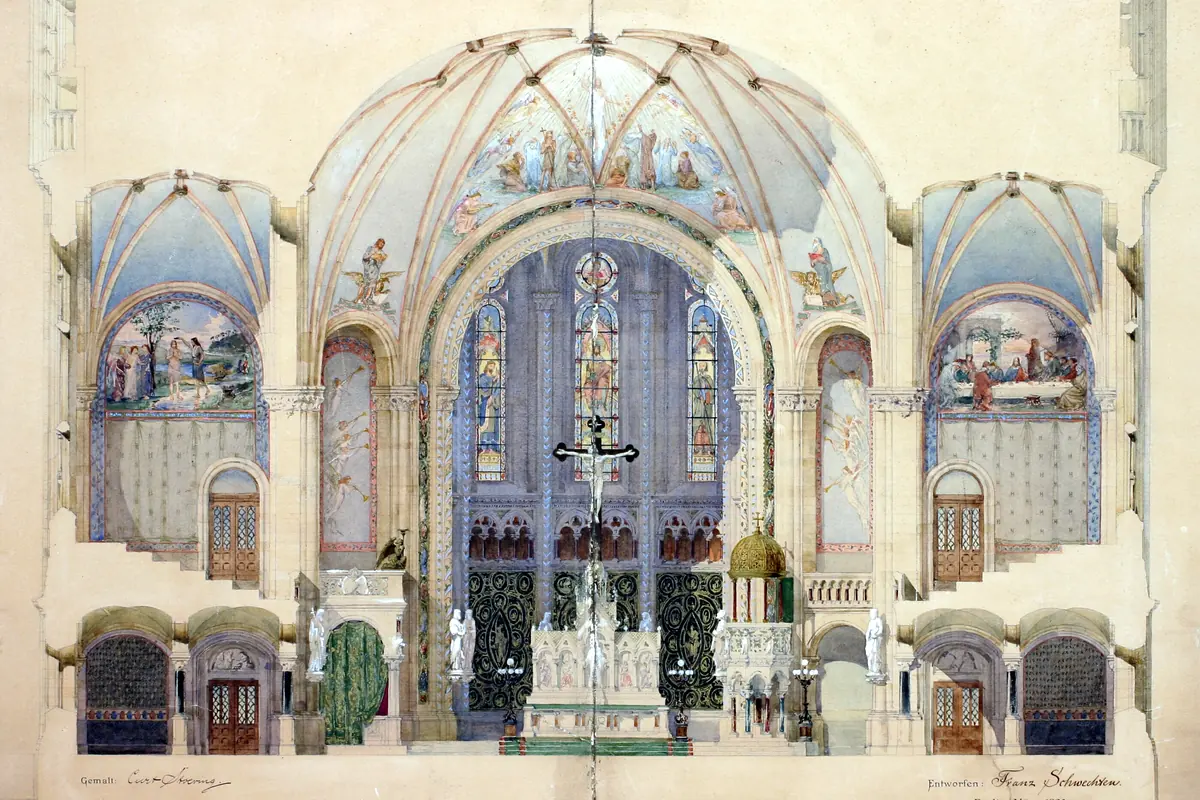
The church was part of a Protestant church-building programme begun by Kaiser Wilhelm II and Empress Augusta Victoria, and he named it for his grandfather, Wilhelm I. The architect Franz Schwechten won the design competition with a large Neo-Romanesque church modelled on Bonn Minster, with a nave that seated more than 2,000 people. The foundation stone was laid on 22 March 1891, Wilhelm I's birthday.
A church of mosaics
The design called for a great deal of wall mosaic, and the entrance hall at the base of the tower carried the richest of it. The church was dedicated on 1 September 1895, although the entrance hall was finished and consecrated only in 1906. The hall was conceived as a memorial hall to Wilhelm I from the start, which is part of why the building's name contains the word memorial.
The night of 22 November 1943
On the evening of 22 November 1943 Berlin was bombed more heavily than ever before, and the church was badly damaged and made unusable. Roof and mosaic vaults fell in, and the outer walls stood at different heights. The great tower survived with its top broken away, and the mosaics and reliefs in the entrance hall at its base came through relatively well. A broken silhouette gave the tower its nickname, der hohle Zahn, the hollow tooth. The tower had stood 113 metres high and now stands 71 metres.
What to do with a ruin
The future of the ruin was fought over from 1947 until the early 1960s. Ideas ranged from rebuilding the church as it was, to combining old and new, to a modern church on a new site. Services and occasional concerts took place in the cleared ruin under open sky in the early 1950s. West Berlin's authorities wanted a modern sign for the city's most prominent square, and the church wanted to stay where it was.
Eiermann's competition
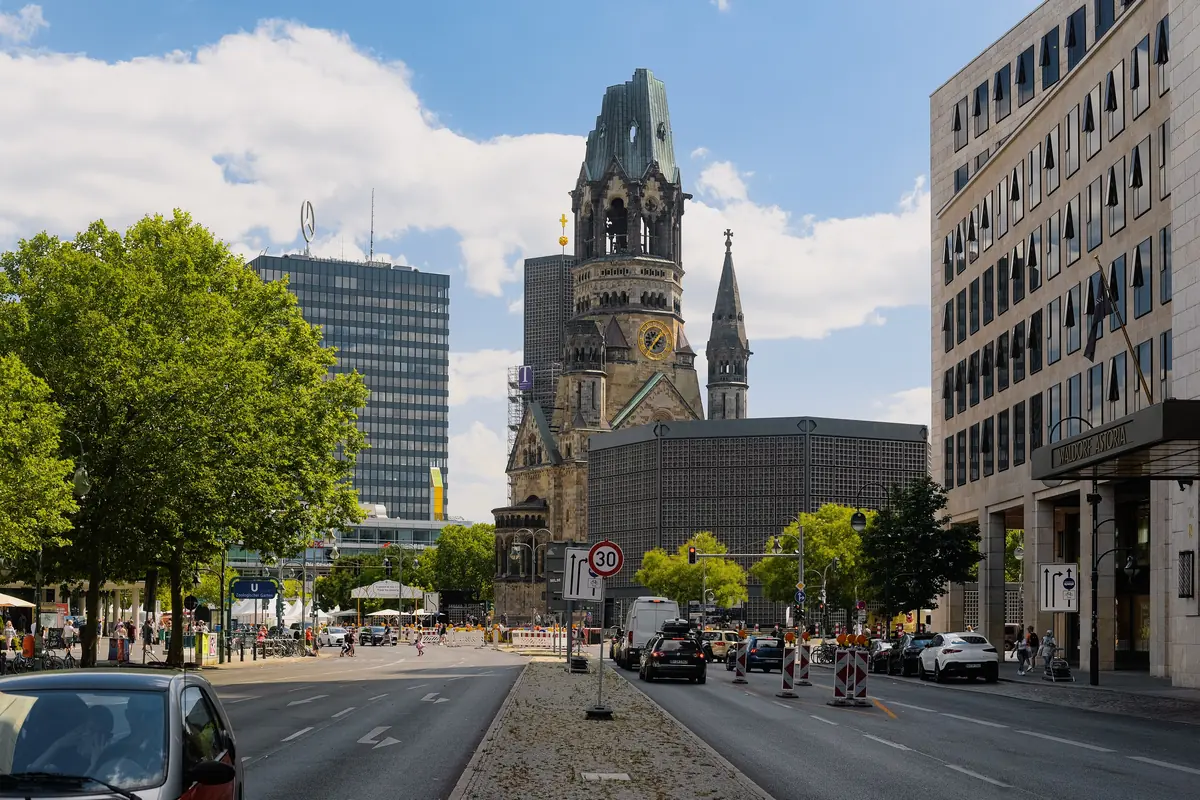
In 1956 the church foundation and the Berlin Senate held a competition. Egon Eiermann won, and his first plan was to remove the tower and build entirely new. The public objected, and the ruined tower was described as the heart of Berlin. He revised the design to keep it, pulled down most of the rest of the old structure, and set four new buildings around it: the church, a bell tower, a chapel and a foyer.
The tower today
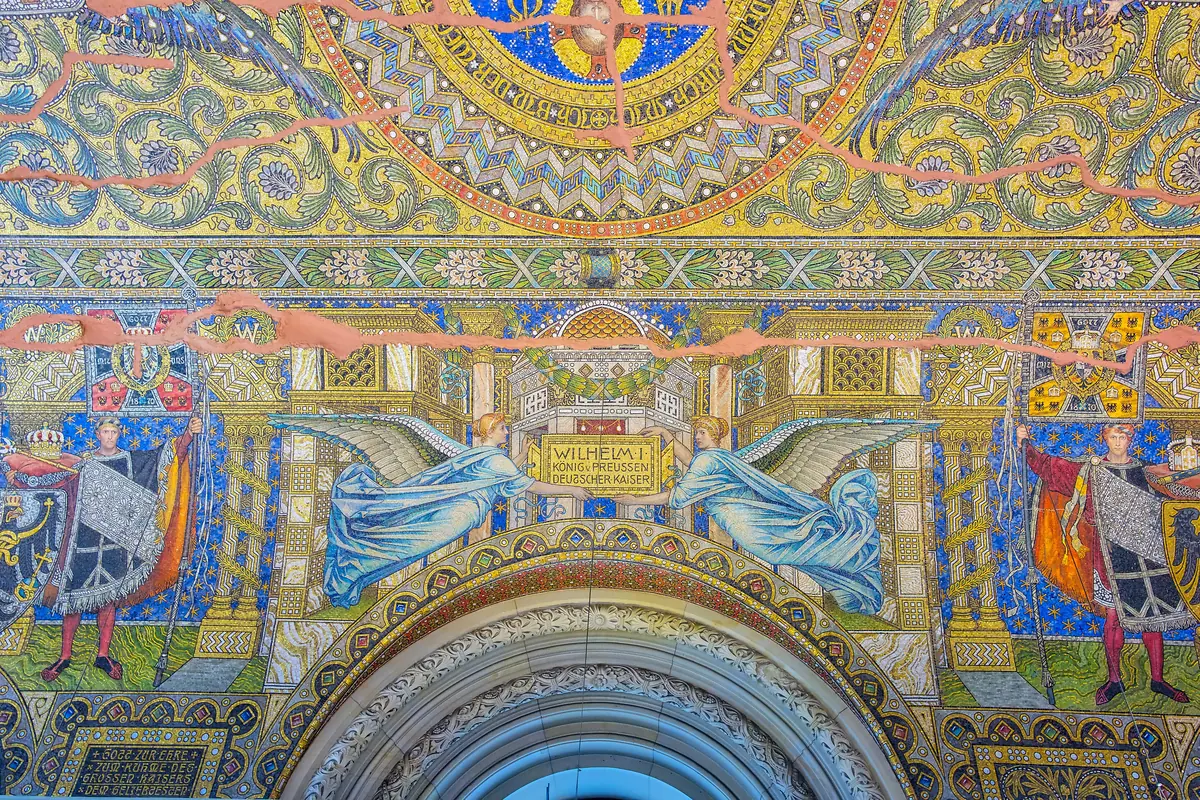
The tower's entrance hall was reopened to visitors in 1987 as a memorial hall, with an exhibition on the church's history and its meaning as a warning and a call to peace. Visitors there meet mosaics from the first church, a damaged statue of Christ from the old altar, the Cross of Nails from Coventry and an icon cross from the Russian Orthodox Church. The cross from Coventry is a sign of reconciliation, made from nails from Coventry Cathedral's roof timbers.
What is open now
The church's own site says the memorial hall is to close for renovation works, and describes a programme of works on the whole ensemble. It states that services, concerts, events and tours continue. For a concert visit, the practical point is simple: the new church, where the concert takes place, is separate from the tower, so a closed hall does not cancel your evening. Check the church's visit page for what you can see on the day, and treat the tower as a daytime visit and the concert as an evening one. Seen together, the two show how the church remembers its own history and still uses the new building for music.
Sources